Buying adhesives in bulk: wood glue, tile adhesive types, industrial adhesives, GST and quotes
How to buy PVA wood adhesive, tile adhesives and industrial adhesives and sealants: IS 4835, the five tile adhesive types in IS 15477, labels and shelf life, 18% GST and red flags.
7 min read
In this article
Adhesives are bought by job: what you are bonding, to what, where it will be used and how fast it must set. Two Indian Standards cover common bulk buys: IS 4835 for polyvinyl acetate (PVA) wood adhesive and IS 15477 for tile adhesives, which it divides into five types. Neither is under compulsory BIS certification. GST on prepared glues and adhesives, and on sealants and mastics, is 18% (Notification 9/2025-Central Tax (Rate) (opens in a new tab)). Ask for the product data sheet and safety data sheet, check batch dates, and test on your own materials before a large order.
Key facts
- IS 4835 covers PVA dispersion adhesives for general use in the wood, veneer and furniture industries. It requires at least 40% solid resin content and not more than 2% ash, and asks for each container to show the maker, the batch number, the date of manufacture and the last date the maker recommends for use (IS 4835:1979, clauses 1, 6 and 7 (opens in a new tab); the public copy is the 1979 edition).
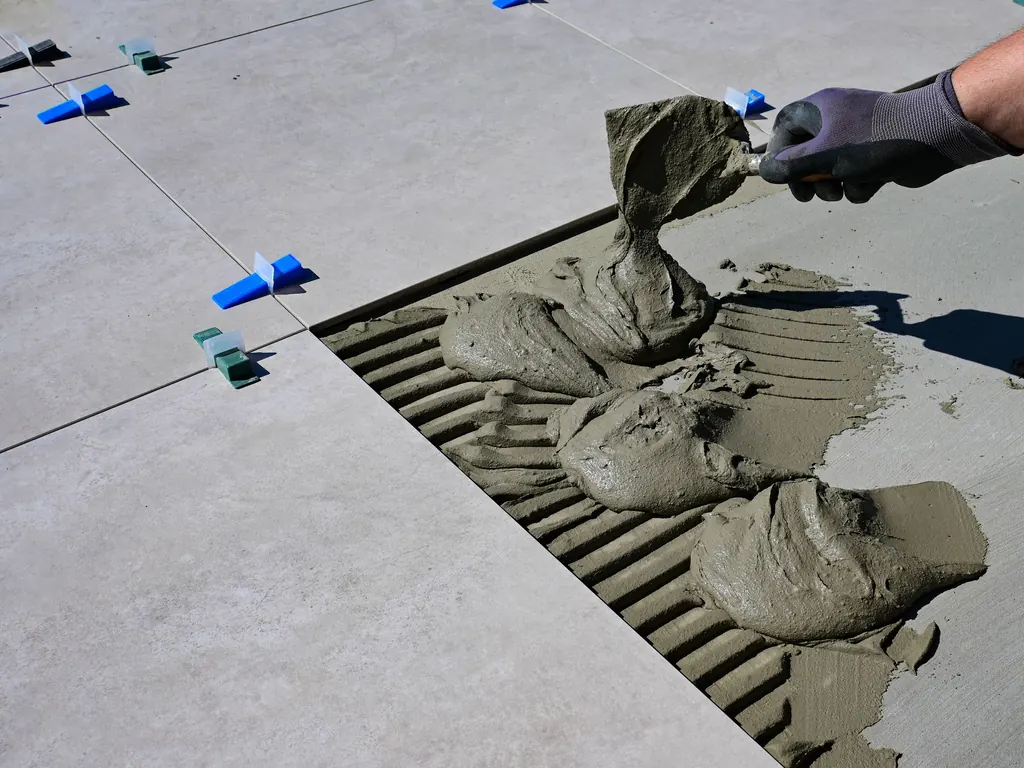
- IS 15477 sorts tile adhesives into five types. Type 1 is for porous ceramic tiles up to 300 x 300 mm in interior dry areas; Type 2 for vitrified and other low-porosity tiles, large tiles and stone, including wet areas and exterior floors; Type 3 for tiles and stone on exterior walls; Type 4 for drywall boards; Type 5, reaction resin adhesives such as epoxy or polyurethane, for all tiles including on metal and glass (IS 15477:2019, clause 4 (opens in a new tab)).
- Each bag or container of tile adhesive must show the maker, batch, month and year of manufacture, the type, special characteristics such as deformability (S1 or S2), open time, storage life and mixing instructions (IS 15477:2019, clause 8.2).
- Adhesives and sealants are not on BIS's list of products under compulsory certification (BIS Scheme-I list (opens in a new tab)).
Choosing the adhesive
- Wood and furniture: PVA adhesive to IS 4835 for general joinery; ask the supplier about water resistance if the furniture is for kitchens or bathrooms.
- Tiles and stone: the IS 15477 type that matches the tile, its size, the surface behind it and the location. For example, vitrified tiles in a bathroom need at least Type 2; tiles on an outside wall need Type 3. For tiles larger than 600 x 600 mm on drywall, IS 15477 also requires a deformability class (clause 4.4).
- Industrial bonding (metal, plastics, rubber, composites): epoxy, polyurethane, contact (synthetic rubber), cyanoacrylate or hot-melt adhesives, chosen with the supplier's technical team for the materials, joint design, temperature and cure time. Ask for a trial on your own parts.
- Sealing joints: silicone, polyurethane or acrylic sealants, by movement, weather exposure and whether the joint will be painted.
What to put in your requirement
- Materials and conditions: what you are bonding, indoor or outdoor, wet or dry, temperature range.
- Product: standard and type (for example "tile adhesive, IS 15477 Type 2"), or chemistry and the maker's product name.
- Performance: open time, set or cure time, and strength the job needs, as the data sheet states it.
- Packing: bag, bucket, drum or cartridge, and the quantity per delivery.
- Documents: product data sheet and safety data sheet; a batch test report if your quality team needs one.
How to compare quotes on landed cost
- Same product class. A Type 1 tile adhesive and a Type 2 are different products, whatever the bag weight.
- Coverage. Compare cost per square metre (tile adhesive) or per joint or part (industrial adhesives), from the maker's coverage figures.
- Shelf life. Ask for stock with most of its storage life left, so you can use it before the last recommended date.
- Pack sizes and handling. Some solvent-based products need safe storage; ask the supplier what the data sheet requires.
- Freight and GST at 18%, shown separately.
GST rate and HSN code
Prepared glues and other prepared adhesives fall under HSN 3506, and mastics, caulking compounds and painters' fillings under 3214. Notification 9/2025-Central Tax (Rate) lists both headings in its 9% schedule, which gives 18% with state tax (Notification 9/2025-Central Tax (Rate) (opens in a new tab)). Cement-based tile adhesives are sometimes classified under heading 3824 instead, which is in the same 9% schedule; ask the supplier which HSN code it uses. An inter-state purchase carries the same total as IGST (Notification 9/2025-Integrated Tax (Rate) (opens in a new tab)). Ask your CA about input tax credit for your use.
Questions to ask suppliers
- Which standard and type does this product meet? Can you share the product data sheet and safety data sheet?
- What are the open time, set time and storage life?
- What is the month and year of manufacture of the stock you will send?
- What coverage should we expect for our tile size or joint?
- Can you send a sample for a trial on our own materials?
- Is the rate delivered to my site or plant, with GST shown separately?
Red flags
- Bags or containers with no batch number, manufacturing date or storage life.
- A tile adhesive with no type marked, offered for vitrified or large tiles.
- Stock close to or past the maker's last recommended date.
- No safety data sheet for a solvent-based or reactive adhesive.
- A brand-name product at a price far below the brand's dealers, or packs with poor printing.
- A request to pay a personal bank account or UPI ID that does not match the supplier's GST-registered name.
How Indibaba can help
Tell Indibaba AI what you need, for example "tile adhesive IS 15477 Type 2 for 600 x 1200 mm vitrified floor tiles, 900 bags of 20 kg, plus PVA wood adhesive, 200 kg, delivered to a site in Indore", or use the requirement form. Indibaba AI drafts the requirement and nothing goes to suppliers until you confirm it. It reaches suppliers listed under adhesives and sealants and the RFQ market, where other sellers can quote. Indibaba is new, so some categories still have few suppliers. Suppliers that Indibaba has checked carry the Indibaba Certified badge; others show "Not checked yet".
Rules as of 18 November 2026. This article explains public rules in plain English. For a decision about your business, check the official notification or ask your CA.
Frequently asked questions
Which tile adhesive type should I use for vitrified tiles?
IS 15477 recommends Type 2 or higher for vitrified and other low-porosity tiles, large tiles and stone, including wet areas and exterior floors. For exterior walls, use Type 3; for drywall boards, Type 4.
Is BIS certification compulsory for adhesives?
No. Adhesives and sealants are not on BIS's list of products under compulsory certification. IS 4835 and IS 15477 are voluntary standards you can name in your order.
What is the GST rate on adhesives?
18%. Prepared glues and adhesives under HSN 3506 and mastics and sealants under 3214 are in the 9% central tax schedule of Notification 9/2025-Central Tax (Rate).
How long can adhesive be stored?
As long as the maker's storage life on the pack, under the stated storage conditions. IS 4835 asks wood adhesive containers to show the date of manufacture and the last date recommended for use.
Sources
We checked the facts in this article against these sources on 18 November 2026.
- IS 4835:1979 Polyvinyl acetate dispersion based adhesives for wood, public copy (opens in a new tab), Bureau of Indian Standards (copy on Internet Archive). Read on 18 November 2026.
- IS 15477:2019 Adhesives for use with ceramic tiles and mosaics, public copy (opens in a new tab), Bureau of Indian Standards (copy on Internet Archive). Read on 18 November 2026.
- Products under compulsory certification, Scheme-I (ISI Mark Scheme) (opens in a new tab), Bureau of Indian Standards, last updated 21 October 2026. Read on 18 November 2026.
- Notification No. 9/2025-Central Tax (Rate) (opens in a new tab), Central Board of Indirect Taxes and Customs (CBIC), 17 September 2025, as amended up to Notification No. 02/2026-Central Tax (Rate). Read on 18 November 2026.
- Notification No. 9/2025-Integrated Tax (Rate) (opens in a new tab), CBIC, 17 September 2025. Read on 18 November 2026.